

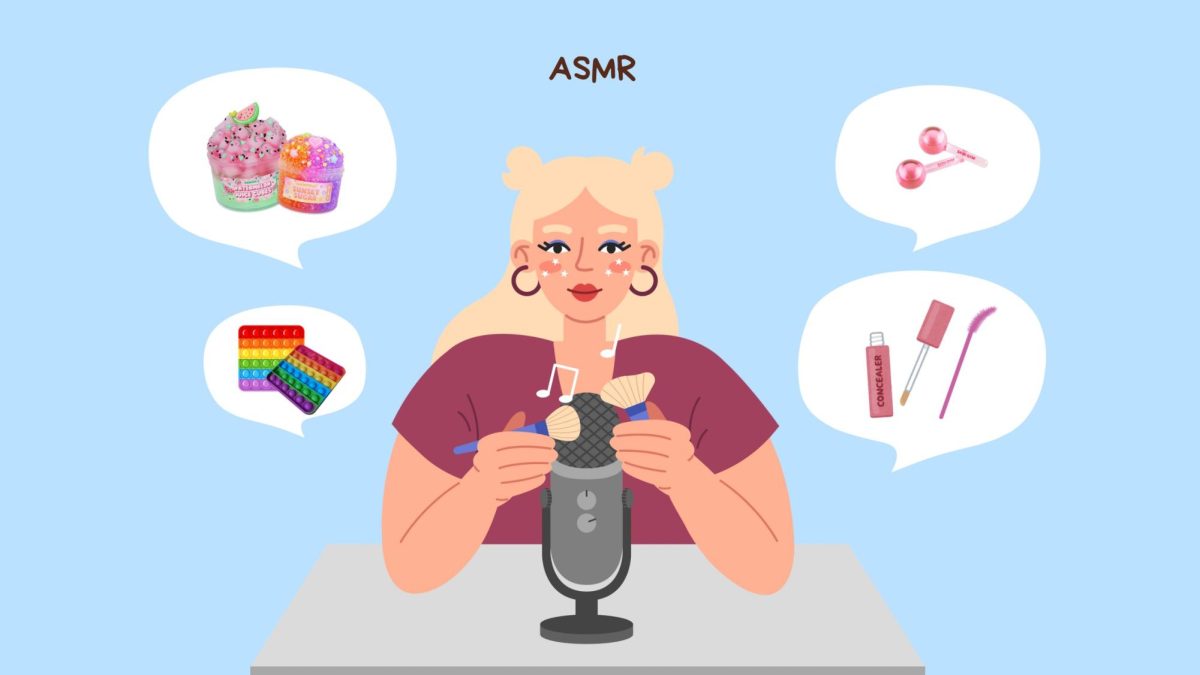
Autonomous Sensory Meridian Response, better known as ‘ASMR,’ is a physical reaction triggered by specific auditory or visual stimuli. This calming, relaxing sensation is most often caused by soft sounds like whispering, tapping, or crunching, as well as by watching certain repetitive and monotonous visual tasks.
We went around Hamilton High and asked students and staff if they knew what ASMR was, and more importantly, if they believed that ASMR could actually be beneficial for students.
Some people believe that it’s not something that could necessarily help students, mainly because they see it as a strange concept. “Yes, I know what ASMR is,” said SAS 11th grader Andrew Chung. “I don’t believe it is beneficial, it’s just a bunch of random noises.” AMPA teacher Ms. Pivaro also shared her opinion on why she personally doesn’t recommend it. “I think it’s weird. I think it’s weird that you want to listen to scratchy noises and people whispering, and I don’t understand how it’s relaxing and not anxiety-inducing.”
We also had some people who were on the fence about their views; being neither for or against the whole idea. AMPA 11th grader Max Olsen told us that he was familiar with ASMR and believes it’s all up to the individual. “I mean, if you like it, you like it. But, I don’t think it’s anything horrible or worth mentioning in my opinion.”
Later, SAS teacher Mr. Garcia offered another neutral perspective that, even if it might not be for him, could possibly be beneficial for some students. “I guess if, for me, it doesn’t provide much benefit based on what I’ve experienced with it… But I’ve had some people tell me it does have a calming or relaxing effect for them. So, if that’s true, then I can see it being helpful for some.”
Then, we talked to some who believe ASMR could be advantageous when helping relieve the stress of their students. AMPA teacher Ms. Colson gave us her insight on the question. “Yes! I do think it benefits students. There are a lot of beneficial effects like with white or brown noise; I know brown noise is something that really helps me and I know it’s not the most stereotypical ASMR, but it’s similar in having that background information that helps relax your thoughts. So yes, I think if we selected ASMR in a way that was mindful and created with a purpose of helping students academically, then yes it could absolutely help.”
While ASMR is known worldwide for being a “relaxing” form of media that can help benefit many people dealing with stress, anxiety, or lack of sleep, it’s all very much to each their own. Some may believe it’s more of an uncomfortable feeling, with noises tickling your ears instead of soothing them, whilst others say it’s something that can easily put your mind at ease.